Sometimes You Just Need to Disconnect and Enjoy Your Own Company
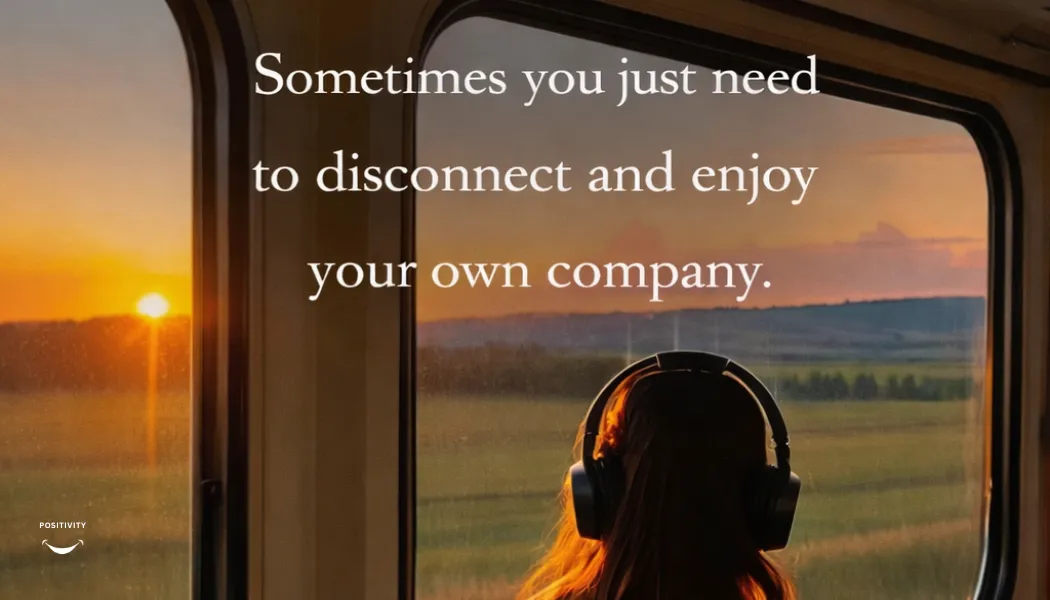
In a world that is constantly buzzing with notifications, messages, expectations, and endless responsibilities, the idea of “disconnecting” can feel almost impossible. We live in a time where being available 24/7 is often seen as normal, where silence feels unfamiliar, and where solitude is sometimes misunderstood as loneliness.
But what if stepping away is exactly what we need?
What if the quiet moments, the ones where you are alone with your thoughts, are not empty—but full of meaning, healing, and clarity?
The simple truth is this: sometimes you just need to disconnect and enjoy your own company.
The Noise We Live In
Modern life is loud—not just in sound, but in energy.
From the moment we wake up, we are pulled into a whirlwind of activity. Phones light up with notifications. Social media feeds demand attention. Emails wait for responses. Conversations overlap. Expectations pile up.
We are constantly connected—but rarely present.
This constant stimulation can feel productive, even necessary. But over time, it becomes exhausting. Without realizing it, we lose touch with ourselves. We become so focused on responding to the world that we forget to listen to our own inner voice.
And that’s where disconnection becomes powerful—not as an escape, but as a return.
The Difference Between Being Alone and Feeling Lonely
One of the biggest reasons people resist solitude is because they confuse it with loneliness.
Loneliness is the feeling of being disconnected from others, even when you’re surrounded by people. It carries a sense of emptiness, longing, and isolation.
Solitude, on the other hand, is a choice. It is a peaceful state where you are comfortable in your own presence. It is not about lacking connection—it is about reconnecting with yourself.
When you learn to enjoy your own company, you stop depending on external validation for your happiness. You begin to feel complete within yourself.
And that changes everything.
Why You Need to Disconnect

credit - OpenUp
Taking time to disconnect is not a luxury—it’s a necessity.
1. To Recharge Your Mind
Your brain, like your body, needs rest. Constant input—whether from screens, conversations, or tasks—overloads your mental capacity.
When you disconnect, you give your mind the space to breathe. Thoughts settle. Clarity returns. Creativity flows naturally.
Sometimes the best ideas don’t come when you’re trying—they come when you pause.
2. To Reconnect with Yourself
When was the last time you truly listened to your thoughts without distraction?
Not while scrolling. Not while multitasking. Just you, present with yourself.
Disconnecting allows you to check in with your emotions, your desires, and your needs. It helps you understand what you’re feeling and why.
In that quiet space, you often find answers you didn’t even know you were searching for.
3. To Reduce Stress and Anxiety
Constant connection often leads to constant comparison.
You see others’ achievements, lifestyles, and highlight reels—and without realizing it, you start measuring your life against theirs.
This can create unnecessary pressure and anxiety.
Stepping away from that noise helps you reset. It reminds you that your journey is your own. That you don’t have to keep up with anyone else.
Peace begins when comparison ends.
4. To Build Self-Relationship
Just like any relationship, the one you have with yourself needs time and attention.
Spending time alone allows you to understand your likes, dislikes, passions, and boundaries. You become more self-aware, more confident, and more grounded.
When you enjoy your own company, you no longer fear being alone. Instead, you cherish it.
The Beauty of Your Own Company
There is something incredibly freeing about being comfortable with yourself.
It means you can sit in silence without needing distraction. You can enjoy a moment without sharing it online. You can be present without seeking approval.
You start to notice small things—the warmth of sunlight, the sound of birds, the rhythm of your breath.
These moments may seem simple, but they are deeply fulfilling.
Because true happiness is not always found in big events or grand experiences. Sometimes, it’s found in quiet moments of self-connection.
Simple Ways to Disconnect

credit - Create a great life
Disconnecting doesn’t mean disappearing from the world. It simply means creating intentional space for yourself.
Here are some gentle ways to begin:
1. Take a Digital Break
Set aside time each day where you stay away from your phone or social media. Even 30 minutes can make a difference.
Let your mind exist without constant input.
2. Spend Time in Nature
Go for a walk, sit in a park, or simply step outside.
Nature has a calming effect that helps you reconnect with yourself and the present moment.
3. Enjoy a Solo Activity
Read a book, write in a journal, listen to music, or pursue a hobby you love.
Do it not for productivity—but for joy.
4. Practice Mindfulness
Sit quietly, close your eyes, and focus on your breath.
You don’t need to control your thoughts—just observe them.
This simple practice can bring a deep sense of calm and awareness.
5. Create “Me Time” Rituals
Whether it’s a morning coffee alone, an evening walk, or quiet reflection before bed—build small rituals that are just for you.
These moments become anchors of peace in your day.
Overcoming the Fear of Being Alone
For many people, silence can feel uncomfortable at first.
Without distractions, thoughts become louder. Emotions surface. It can feel unfamiliar, even unsettling.
But this discomfort is not something to avoid—it’s something to understand.
Give yourself time. Start small.
The more you sit with yourself, the more comfortable it becomes. What once felt like emptiness slowly turns into peace.
And eventually, solitude becomes something you look forward to.
The Strength in Solitude
Being able to enjoy your own company is a form of strength.
It means you are not dependent on constant validation. It means you are secure in who you are. It means you can stand alone without feeling incomplete.
This doesn’t mean you don’t value relationships—it means you bring a stronger, more balanced version of yourself into them.
Because when you are fulfilled within, your connections with others become healthier and more meaningful.
Finding Balance in a Connected World
Disconnecting doesn’t mean rejecting the world. It means creating balance.

credit - Quality mind
You can still stay connected, communicate, and engage—but without losing yourself in the process.
Think of it like this: connection with others is important, but connection with yourself is essential.
When both are balanced, life feels more peaceful, more grounded, and more fulfilling.
The Quiet Power of Presence
When you disconnect, you begin to notice something beautiful—you become present.
You start to truly experience moments instead of rushing through them. You listen more deeply. You feel more fully.
Life slows down, not in reality, but in perception.
And in that space, even ordinary moments begin to feel extraordinary.
A Gentle Reminder
You don’t always need to be available.
You don’t always need to respond immediately.
You don’t always need to keep up.
It’s okay to step back.
It’s okay to pause.
It’s okay to choose yourself.
Sometimes, the most important thing you can do is simply sit with yourself and breathe.
Conclusion: Coming Home to Yourself
In the end, disconnecting is not about escaping the world—it’s about coming home to yourself.
It’s about remembering who you are beneath the noise.
It’s about finding peace in your own presence.
It’s about realizing that your company is enough.
Because when you truly enjoy your own company, you no longer search for happiness everywhere else.
You carry it within you.
So take that moment.
Step away.
Breathe deeply.
And just be.
Because sometimes, the best connection you can have… is with yourself.
Stay Inspired
Get a daily dose of positivity delivered to your inbox.