A Town in Japan Has Revived an Abandoned Rice Field into a Community Farm
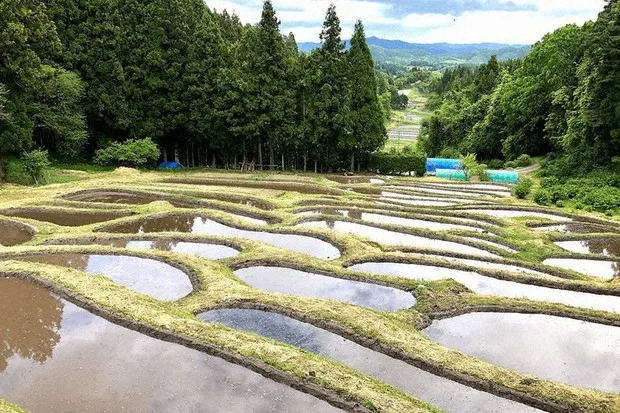
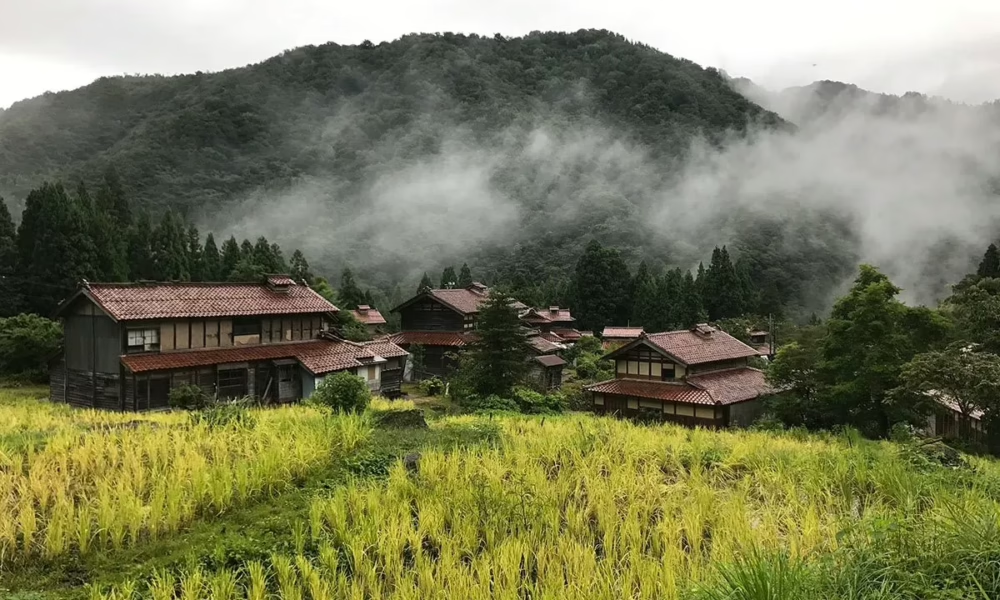
In many rural parts of the world, abandoned farmland tells a quiet story of change—aging populations, urban migration, and traditions slowly fading away. In one small town in Japan, however, an abandoned rice field has been given a second life. What was once overgrown and forgotten is now a thriving community farm, bringing people together, restoring local heritage, and reminding everyone of the power of shared purpose.
In many rural parts of the world, abandoned farmland tells a quiet story of change—aging populations, urban migration, and traditions slowly fading away. In one small town in Japan, however, an abandoned rice field has been given a second life. What was once overgrown and forgotten is now a thriving community farm, bringing people together, restoring local heritage, and reminding everyone of the power of shared purpose.
This is not just a story about agriculture. It is a story about community, resilience, and the belief that even neglected spaces can bloom again when people come together.
- The Silent Problem of Abandoned Farmland
- A Simple Idea Sparks a Big Change
- From Overgrown Field to Shared Vision
- Reclaiming Cultural Heritage
- A Farm for Everyone
- Strengthening Social Bonds
- Teaching Sustainability Through Action
- Children Learning Life Lessons in the Fields
- Mental Health and Well-Being
- Revitalizing the Local Economy
- A Model for Rural Renewal
- Hope Rooted in the Soil
- Why This Story Matters
- A Quiet Revolution of Togetherness
The Silent Problem of Abandoned Farmland
Japan has long faced a unique challenge: as younger generations move to cities for work and education, many rural towns are left with fewer people to maintain traditional farming practices. Rice fields—once central to daily life and culture—have been gradually abandoned.
In this particular town, one rice field sat unused for years. Weeds grew tall, irrigation channels broke down, and the land that once fed families became a symbol of loss.
Yet instead of accepting this decline, local residents saw possibility.
A Simple Idea Sparks a Big Change
The idea began modestly. A small group of residents—farmers, retirees, young families, and volunteers—asked a simple question:
What if we worked on this land together?
Rather than selling the field or leaving it untouched, they proposed transforming it into a community farm, where anyone could participate regardless of age, experience, or background.
What followed was a collective effort fueled by cooperation and hope.
From Overgrown Field to Shared Vision
Reviving the rice field required patience and teamwork. Volunteers cleared weeds, repaired irrigation systems, and learned—or relearned—traditional farming techniques.
Older residents shared knowledge passed down through generations:
- How to prepare the soil
- When to plant and harvest
- How to care for rice paddies sustainably
Younger participants brought new energy, ideas, and tools. Together, they bridged generations and rebuilt more than just land—they rebuilt connection.
Reclaiming Cultural Heritage
Rice farming in Japan is deeply cultural, tied to festivals, seasonal rhythms, and shared meals. By reviving the field, the town also revived these traditions.
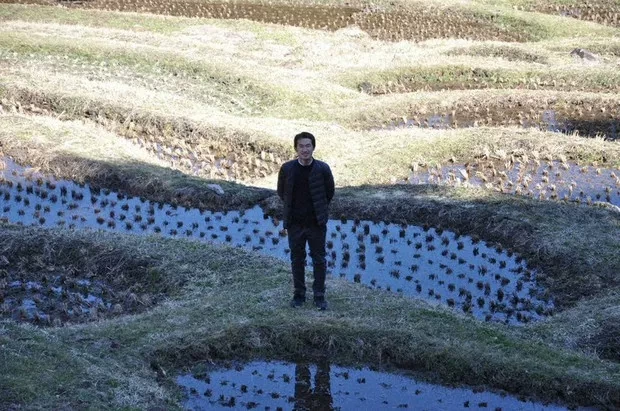
Community members now gather to:
- Plant rice seedlings together
- Celebrate harvest festivals
- Share meals made from their own crops
- Teach children about farming and nature
For many elders, seeing children walk barefoot through the paddies again was deeply emotional—a sign that their heritage would not disappear.
A Farm for Everyone
One of the most beautiful aspects of the project is its inclusivity. The community farm is open to:
- Seniors seeking purpose and activity
- Children learning where food comes from
- Families wanting to spend time outdoors
- Newcomers looking to connect
There is no pressure to be productive or perfect. Participation is about presence, learning, and cooperation.
Even those who cannot physically farm contribute by organizing events, cooking, or simply encouraging others.
Strengthening Social Bonds
As the field flourished, so did relationships.
Neighbors who once barely spoke now worked side by side. Conversations flowed naturally while planting or harvesting. Loneliness—especially among elderly residents—began to fade.
The farm became:
- A meeting place
- A source of shared pride
- A reminder that community still matters
In a society where isolation is an increasing concern, this shared space brought people back together.
Teaching Sustainability Through Action
Beyond cultural and social benefits, the community farm promotes sustainable living.
Participants learn:
- Natural farming techniques
- Responsible water use
- Respect for seasonal cycles
- The value of local food systems
By growing their own rice and vegetables, residents reduce reliance on imported food and gain a deeper appreciation for the environment.
Sustainability here is not a concept—it’s a daily practice.
Children Learning Life Lessons in the Fields
For children, the farm has become an open-air classroom.

They learn:
- Patience by waiting for crops to grow
- Responsibility by caring for plants
- Teamwork by working alongside others
- Gratitude for the food on their plates
Many parents say their children now eat with more awareness, understanding the effort behind every grain of rice.
These lessons will stay with them long after childhood.
Mental Health and Well-Being
Working with soil, plants, and water has proven therapeutic. Participants often describe the farm as calming and grounding.
Benefits include:
- Reduced stress
- Improved physical activity
- A sense of accomplishment
- Emotional connection to nature
For seniors and retirees, especially, the farm offers routine, purpose, and joy—essential ingredients for well-being.
Revitalizing the Local Economy
While the project is community-driven rather than profit-focused, it has brought small economic benefits.
Locally grown rice is sometimes sold at town events, with proceeds reinvested into the farm. Visitors drawn by the project support nearby shops and cafes.
The revived field has become a symbol of local pride, attracting attention from neighboring towns and inspiring similar initiatives.
A Model for Rural Renewal
This small town’s success offers valuable lessons for other rural communities facing decline.
It shows that:
- Revitalization doesn’t require massive funding
- Community involvement is the greatest resource
- Tradition and innovation can coexist
By starting small and working together, communities can reclaim what was lost.
Hope Rooted in the Soil
In a fast-changing world, this story reminds us that progress does not always mean moving forward—it can also mean returning to what connects us.
An abandoned rice field could have remained forgotten. Instead, it became a place of hope, learning, and shared effort.
It proves that land, like people, can heal when given care.
Why This Story Matters
This good news matters because it speaks to universal challenges:
- Rural depopulation
- Loss of tradition
- Social isolation
- Environmental sustainability
And it offers a simple, powerful response: community.
When people come together with shared purpose, even abandoned spaces can become sources of life.
A Quiet Revolution of Togetherness
There were no headlines, no grand openings, no sweeping policies—just neighbors showing up, week after week.
And yet, the impact is profound.
Sometimes, the most meaningful change begins with hands in the soil and hearts open to collaboration.
A Town in Japan Has Revived an Abandoned Rice Field into a Community Farm
When communities come together to restore forgotten land, they don’t just grow food—they grow connection, purpose, and hope. If this revival inspired you, here are a few uplifting reads that celebrate regeneration, shared effort, and people-led change:
- Mother-Daughter Duo Creates a Nature Lover’s Paradise → A touching example of how care, patience, and collaboration can transform land into a place of belonging.
- A Library Changing Lives in Rural India: The Inspiring Story of Bansa Village → How community-driven initiatives can revive spaces and uplift generations.
- Mangrove Miracle: One Leader Restores 40,000 m² in the Solomon Islands → Proof that restoration—led by people—can heal ecosystems and strengthen communities.
Looking for Words That Celebrate Community, Renewal, and Togetherness?
Positive Vibes Quotes → An uplifting collection of quotes that reflect cooperation, optimism, and the joy of building something meaningful together.
Last verified: March 12, 2026
Stay Inspired
Get a daily dose of positivity delivered to your inbox.